

Market Insight — GCC India 2025–2026
Upcoming Global Capability Centres (2025–2026): Why India Has Become the World’s Innovation Backbone
The Problem: Global Enterprises Are Running Out of Places to Build Fast
Every CFO and Chief Strategy Officer is asking the same question right now: where do we build our next engineering hub — one that scales fast, costs less, and doesn’t compromise on quality?
For years, the answer was fragmented — offshoring, small satellite offices, Eastern Europe, Southeast Asia. None of it solved the real problem: enterprises don’t just need cheaper execution anymore, they need owned, strategic capability that can run AI research, product engineering, and global operations under one roof.
That’s the gap Global Capability Centers in India have quietly filled — and in 2025–2026, the shift is no longer quiet. It’s the industry’s biggest structural story.
2,100+ GCCs and Growing
Get access to India’s most comprehensive GCC intelligence database
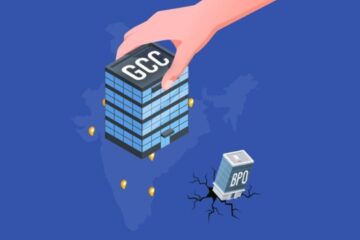
The Shift: From Cost Centers to Command Centers
A decade ago, a GCC in India meant back-office support — ticket resolution, transaction processing, basic IT maintenance. That model is extinct. Today’s centers are built to own global product roadmaps, lead AI and machine learning research, run mission-critical BFSI risk platforms, and drive R&D for aerospace, healthcare, and green energy — from day one.
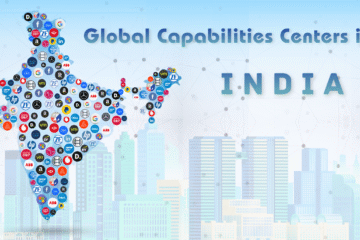
This is why India GCC Market conversations have moved from HR and procurement teams to boardrooms. Setting up a GCC in India is no longer an offshoring decision — it’s a global market entry and innovation strategy decision. With over 2,100+ Global Capability Centers already operational, and hundreds more in the pipeline for 2025–2026, India has become what industry analysts call the global epicentre for capability centres.
Why It Matters: The Business Case Nobody Can Ignore
Three forces are converging to make GCC expansion in India almost inevitable for global enterprises:
1. Talent depth at a scale no other market offers. India produces one of the world’s largest pools of engineers, data scientists, and AI/ML specialists every year — feeding directly into Technology, BFSI, and Engineering GCC functions across the country.
2. Cost advantage without a quality trade-off. Tier-II and Tier-III cities are now absorbing GCC growth that Bengaluru and Hyderabad can no longer accommodate alone, giving enterprises a genuine India expansion strategy that balances cost with capability.
3. A policy and infrastructure environment built for scale. State-level incentives, dedicated tech corridors, and improving ease-of-business frameworks mean a new GCC in India can move from announcement to operational in a fraction of the time it once took.
Put together, this is why Fortune 500 GCC India activity is accelerating rather than slowing down, even as global tech budgets tighten elsewhere.
The Company Stories: Who’s Building, and Where
The top GCC companies in India aren’t hedging anymore — they’re doubling down.
Rolls-Royce and Airbus are deepening their India footprint in aerospace engineering, digital twins, and predictive maintenance, anchoring India’s growing Defence & Aerospace GCC corridor. Workday is expanding enterprise software R&D, reinforcing India’s role as a core product engineering base rather than a support function. Siemens continues to scale industrial automation and sustainability-linked engineering work, tying into the broader Sustainability & Green Energy GCC trend reshaping how manufacturing giants think about India.
These aren’t isolated bets. They reflect a pattern across nearly every sector tracked in the India GCC ecosystem — technology, BFSI, life sciences, manufacturing, and defence are all scaling in parallel.
Market Insights: Where the Next Wave Is Landing
Bengaluru & Hyderabad remain the undisputed powerhouses — the tech and innovation capitals driving global R&D, AI, and cloud-based GCC growth. Chennai & Pune are emerging as the country’s manufacturing, SaaS, and automotive innovation belt, with Pune GCC activity accelerating fastest in engineering-heavy sectors. Gurugram (NCR) is scaling rapidly as a BFSI GCC India and FinTech hub, pulling in analytics-driven, digital-first enterprises. Emerging Tier-II cities — Coimbatore, Ahmedabad, Indore, and Jaipur — are quickly becoming the cost-efficient, talent-rich frontier for the next generation of GCCs.
Across all these hubs, five sectors are driving the bulk of new activity: AI GCC India (automation-led innovation and applied machine learning), BFSI GCC India (advanced analytics, compliance, and risk platforms), Healthcare GCC India (pharmaceutical R&D, diagnostics, and biotech innovation), Manufacturing GCC India (decarbonization, renewable energy, and smart energy systems), and Engineering GCC India (defence and aerospace corridors backed by strategic global partnerships).
How Enterprises Are Approaching Setup in 2025–2026
The path to launching a GCC in India has matured into a repeatable playbook. Most enterprises now move through four stages: market and talent feasibility to validate the right city and skill pool, entity and compliance setup to establish the legal and regulatory foundation, talent and leadership acquisition to build out the founding team, and operational scale-up where the center transitions from a support function into an owned capability hub.
What’s changed is the speed. Enterprises that once budgeted 12–18 months for a GCC to become fully operational are now compressing that timeline significantly, thanks to improved infrastructure, deeper local advisory support, and a maturing vendor ecosystem around real estate, staffing, and compliance.
Risks and What Enterprises Should Watch For
Rapid growth brings real execution risk. The most common missteps include underestimating the leadership hiring timeline, treating a GCC as a cost play rather than a capability investment, and choosing a city based on rent alone rather than talent depth and long-term scalability. Enterprises that get this right typically invest early in market intelligence — understanding which cities, sectors, and talent pools actually align with their roadmap before signing a lease or opening a legal entity.
Frequently Asked Questions
What is a Global Capability Centre (GCC)?
A GCC is an owned offshore or global unit set up by a multinational enterprise to run strategic functions — engineering, R&D, AI, analytics, or global operations — rather than outsourcing them to a third party.
Why are enterprises choosing India for GCC expansion?
India offers a rare combination of deep engineering and AI/ML talent, cost efficiency without a quality trade-off, and a maturing policy and infrastructure environment that supports fast, scalable setup.
Which cities are leading India’s GCC growth in 2025–2026?
Bengaluru and Hyderabad remain the largest hubs, Chennai and Pune are scaling fast in engineering and manufacturing, Gurugram is emerging as a BFSI and FinTech center, and Tier-II cities like Coimbatore, Ahmedabad, Indore, and Jaipur are the newest frontier.
How can KAS Business Consulting help?
KAS provides verified GCC market intelligence, feasibility research, and advisory support to help enterprises identify the right city, sector fit, and go-to-market approach before committing to a GCC setup in India.
The KAS Perspective: What This Means for Your Next Move
At KAS Business Consulting, we don’t just track Global Capability Center trends, we help enterprises act on them. Whether you’re evaluating setting up a GCC in India for the first time, benchmarking competitors already embedded in the India GCC Market, or refining your GCC strategy for 2026 and beyond, the window to move first is narrower than most boardrooms realize.
The enterprises that treated India as a support function five years ago are now the ones playing catch-up. The ones building their India expansion strategy today, with the right GCC advisory services and verified market intelligence, will be the ones setting the pace tomorrow.
India isn’t just hosting the world’s GCCs anymore. It’s defining what a GCC is supposed to be.
Related reading: List of GCCs in Bangalore — 2026 Edition, India BFSI GCCs, 10 Global Companies Building GCCs in India, and Full List of 2,100+ GCCs in India.
Get Access to Verified GCC Intelligence
Unlock insights from India’s most comprehensive database of 2,000+ Global Capability Centres with KAS Business Consulting.

[…] identifying which business functions should move offshore. To stay ahead of the curve, we analyze upcoming Global Capability Centers in India to ensure your setup is […]